
The Ultimate Guide to Laminate Flooring in the Netherlands
Buying a floor is a significant investment. This practical guide helps Dutch and expat homeowners understand laminate flooring before choosing a product or booking an installation.
What’s inside this guide
✓ What is laminate flooring?
✓ AC ratings explained
✓ Laminate Flooring Layers
✓ Laminate Flooring Essentials: Thickness; Water resistance; Underlay
✓ Best Places for Laminate Floor
What is laminate flooring?
Laminate flooring is a multi-layer synthetic floor covering designed to look like real wood. It is popular because it is stylish, durable, affordable, and relatively easy to maintain. Most laminate floors use a click system, which means the boards lock together without glue. The floor is usually installed as a floating floor over an underlay, with expansion gaps around the edges.
AC Ratings Explained
The official source for the AC (Abrasion Class) laminate classification system is the European Producers of Laminate Flooring (EPLF).
The system itself is standardized under the European standard EN 13329, which is globally recognized.
AC ratings indicate how well a laminate floor resists wear, impact, stains, and abrasion. For residential projects, AC4 is usually a strong choice. AC5 is better for very busy homes, rental properties, offices, or light commercial spaces.
AC1 & AC2
Light to moderate residential use (rarely used for flooring today; often reserved for walls or ceilings).
AC3
Heavy residential / light commercial use. Perfect for busy household areas like kitchens, hallways, and living rooms.
AC4
General commercial / heavy residential use. Ideal for very busy homes with large pets or small commercial spaces like boutiques and cafes.
AC5 & AC6
Heavy to extreme commercial use. Engineered for maximum traffic environments like shopping malls, showrooms, or airports.
Laminate Flooring Layers
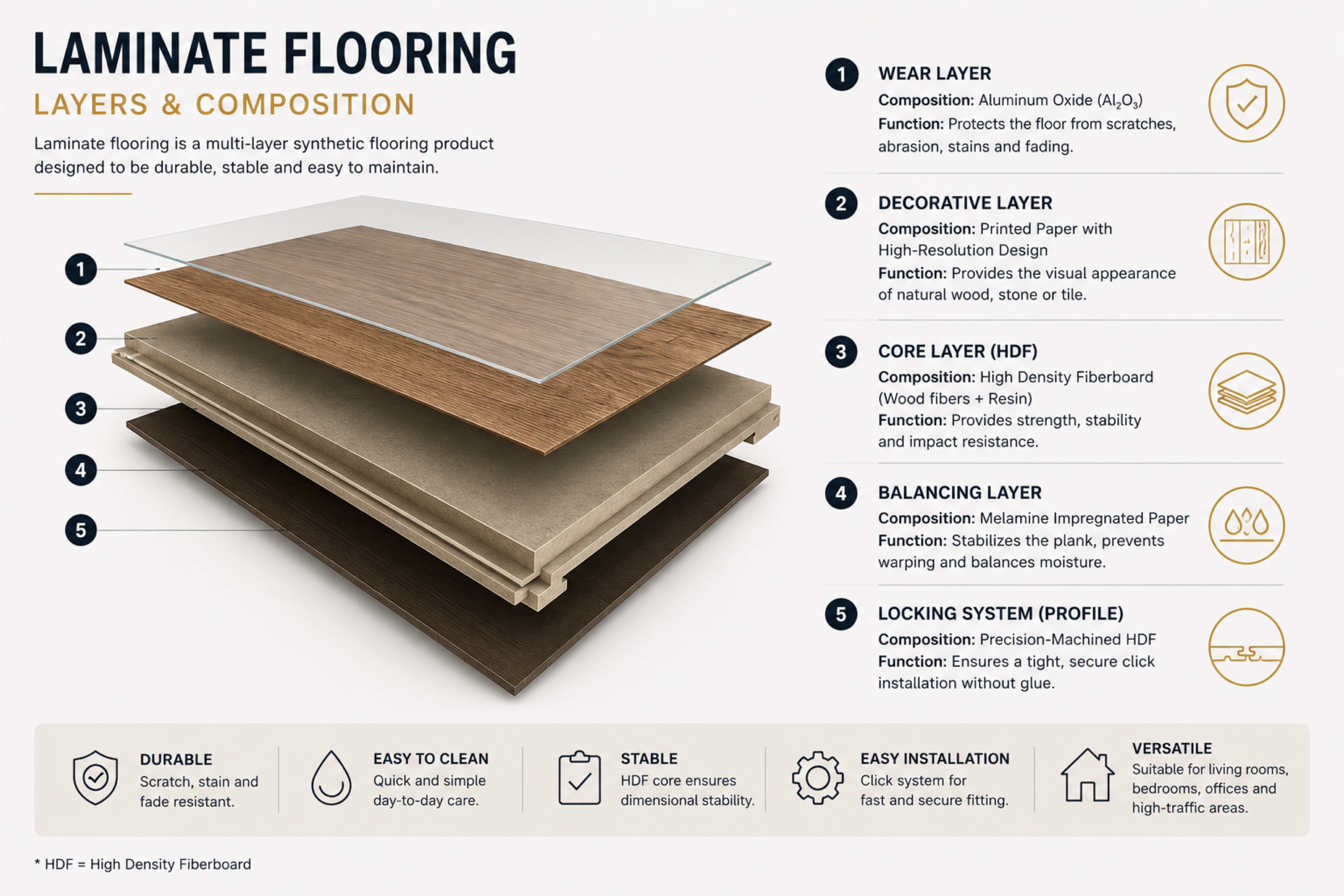
A laminate floor is not made from solid wood. It is a layered product engineered for stability, appearance, and wear resistance.
typical layers
- Wear layer: protects against scratches, stains, and daily wear.
- Decorative layer: creates the wood, stone, or tile appearance.
- HDF core: provides strength, density, and click-system stability.
- Backing layer: helps balance the board and reduce warping.
Laminate Flooring Essentials
Thickness
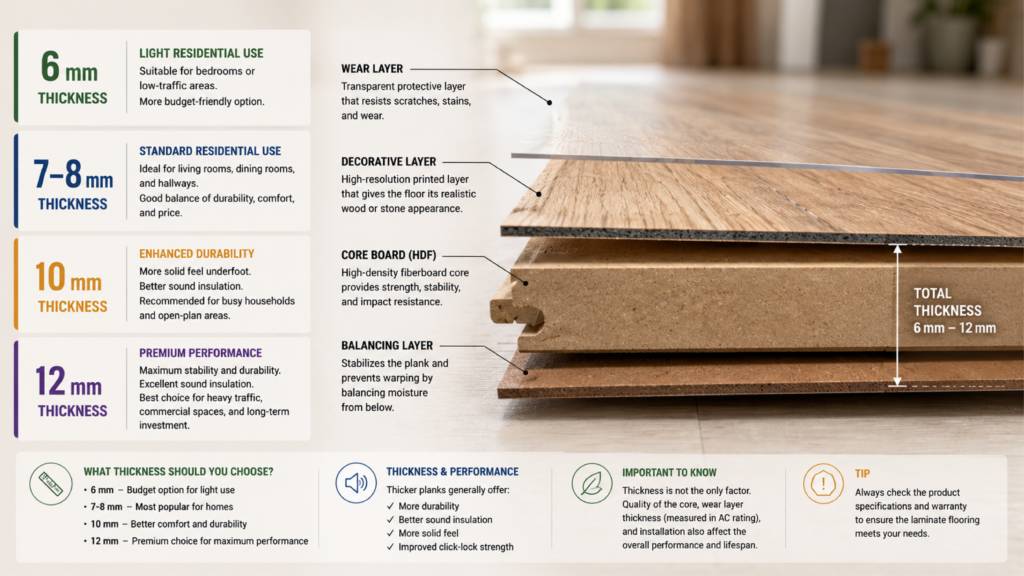
Most laminate floors are between 6 mm and 12 mm thick. Thicker boards often feel more solid, but thickness alone does not define quality. The click system, density, underlay, and subfloor preparation matter just as much.
Water Resistance
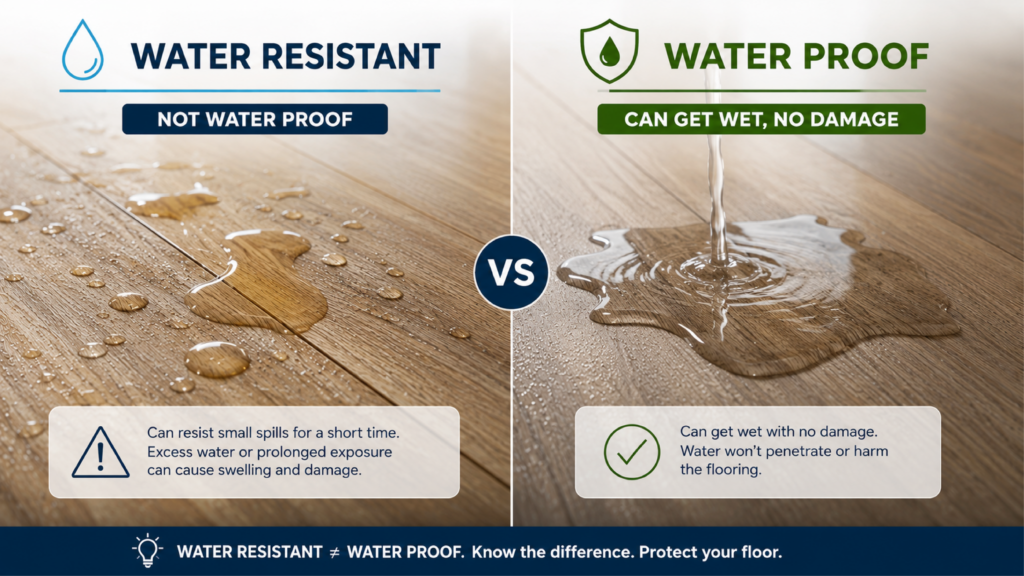
Some laminate floors are water-resistant, but laminate is generally not fully waterproof. Kitchens and hallways may be suitable with the right product, but bathrooms and wet rooms usually require another flooring solution.
Underlay
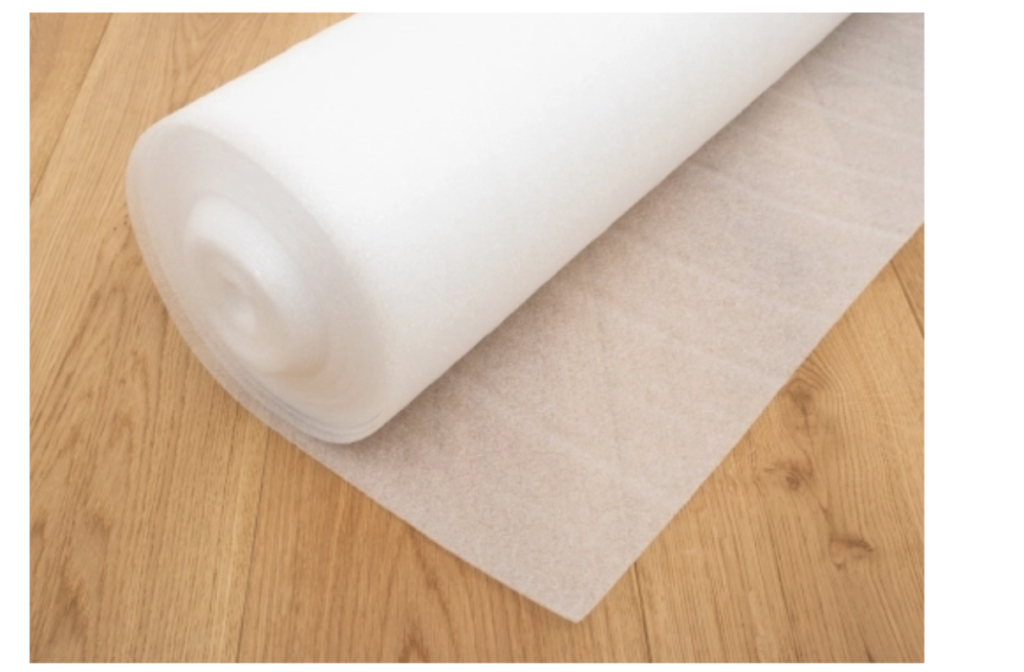
The underlay affects comfort, sound reduction, moisture protection, and the performance of the click system. Choosing the wrong underlay can reduce the lifespan of the floor. Underlays can be made from foam, cork and a lot of different materials
Best Places for Laminate Floor
Living rooms
Laminate is a practical and stylish choice for living rooms, especially when paired with a good underlay for comfort and sound reduction.
Dining rooms
Laminate works well in dining areas, but chair pads and proper cleaning help protect the surface from scratches.
Bedrooms
Bedrooms usually have lower foot traffic, making laminate a cost-effective option with a warm wood-look finish.
Offices
Laminate can be suitable for home offices, but office chairs should be used with a protective mat.
Hallways
Hallways need a stronger laminate, ideally AC4 or AC5, because they receive more daily traffic and impact.
Kitchens
Only use water-resistant laminate in kitchens, and clean spills quickly. For higher water exposure, LVT/PVC may be safer.
Compare all types of floor
Ready to Start Your Flooring Project?
Tell us about your project. We’ll listen, answer your questions, and help you find the flooring solution that’s right for your home and your budget.
IMPORTANT INFORMATION: The information provided in this guide is intended for general educational purposes only. Flooring construction, materials, specifications, and performance may vary between manufacturers, product ranges, and technical standards.